Pages

Friday, August 10, 2012

A crucial alliance

Egyptians celebrate the victory of Mohammed Morsi in Egypt's
(June 24, 2012. Photo by AFP)
Israel should extend its military cooperation anywhere it can strengthen its alliance with Egypt.

"Peace between the two countries has been, and still is, an interest common to both peoples," read the condolence message from Israel's Foreign Ministry to Egypt after the attack on the border this week. Indeed, we have a key common interest in rooting out terror from the Sinai. This week's tragedy has led to what neither Israel nor Egypt dreamed would happen since the signing of the Camp David Accords in 1978.


Tuesday, July 3, 2012

Tests hint at possible Arafat poisoning

Nine-month investigation by Al Jazeera discovers rare, radioactive polonium on ex-Palestinian leader's final belongings.


It was a scene that riveted the world for weeks: The ailing Yasser Arafat, first besieged by Israeli tanks in his Ramallah compound, then shuttled to Paris, where he spent his final days undergoing a barrage of medical tests in a French military hospital.

Monday, July 2, 2012

The Ignored Palestinian Protests: Where's the Coverage?

AP Ramallah beating.jpg


Palestinian policemen scuffle with protesters opposing a meeting between Palestinian President Mahmoud Abbas and Israeli Vice Prime Minister Shaul Mofaz, in the West Bank city of Ramallah, Sunday, July 1, 2012. A scheduled high-profile meeting between Palestinian President Mahmoud Abbas and Israeli Vice Prime Minister Shaul Mofaz has been postponed indefinitely, a senior Palestinian official said Saturday. The rare high-level talks would have been a step toward resuming formal peace negotiations, although expectations were low that they would produce any breakthrough. (AP Photo/Nasser Shiyoukhi)
Normally, the Western media giants deem Palestinian protesters clashing with security forces newsworthy. Normally, the media takes a keen interest in all developments and setbacks regarding Israeli-Palestinian talks.

And so, the media's total lack of interest in recent Palestinian demonstrations against talks with Israel is noteworthy on two counts. Over the weekend, and continuing today, Palestinians have been demonstrating in Ramallah and in other West Bank locations. On Saturday, seven were arrested. Ten were hospitalized, including a local journalist beaten as he tried to cover the events.

Tuesday, June 19, 2012

Iranian President arrives in Brazil fearing isolation

The brazilian rejection of the iranian claim sparked a
yellow sign behind the scenes of the diplomacy.
The decision of the President of Brazil, Dilma Rousseff, to reject the request of the President of Iran, Mahmoud Ahmadinejad, for an official meeting during the Rio +20 soured the relationship Brasilia-Tehran, which had narrowed the friendship between Ahmadinejad and Luiz Inacio Lula da Silva, say diplomats gathered at Riocentro. Behind the scenes of the conference, the mood among delegates Iranians could not be worse, though, officially, Tehran diplomats strive to show tranquility.

Wednesday, June 13, 2012

'Son of Hamas' arrives in Israel

Photo: Deborah Danan
Mosab Hasan Youssef, son of Hamas founder Sheikh Hassan Youssef, arrived in Israel Wednesday evening from the US. Despite receiving an official invitation to visit the Knesset from Deputy Minister Ayoub Kara (Likud), Youssef was detained at passport control for over three hours of questioning before eventually being allowed to proceed.

Sunday, June 10, 2012

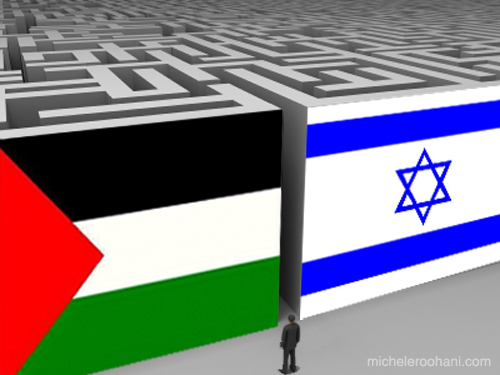
Israel's Conflict as Game Theory

The arab-israeli conflict in a
complex game.
Two men—let us call them Reuben and Simon—are put in a small room containing a suitcase filled with bills Israel has to change certain basic perceptions in order to improve her chances in the negotiations game with the Arabs, totaling $100,000. The owner of the suitcase announces the following: “I will give you the money in the suitcase under one condition…you have to negotiate an agreement on how to divide it. That is the only way I will agree to give you the money.

Thursday, June 7, 2012

68% of Arab-Israelis prefer to live in Israel

Some 80% of Arabs living in Israel blame Jews for the Nakba, but 60% of them are resigned to Israel as a state with a Jewish majority, the Index of Arab-Jewish Relations for 2011, conducted by Prof. Sami Samuha of the University of Haifa shows.

The full results of the survey, which Samuha has run annually for the last 30 years, are due to be announced at a university conference on Thursday.